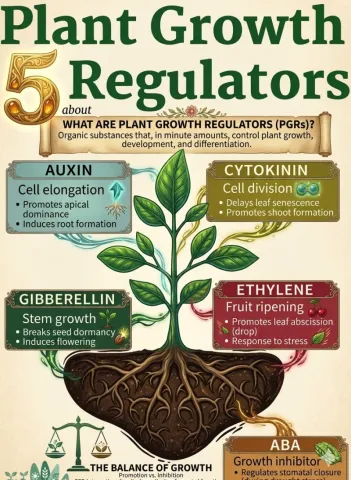
Plant growth regulators (PGRs) are natural or synthetic chemical substances that manage plant life processes like cell division, elongation, ripening, and stress response in small amounts. They act as plant hormones or chemical messengers to speed up or slow down growth.
The Five Main Types of Plant Growth Regulators
- Auxins:
- What they do: Help stems grow tall, bend toward light, and trigger root growth.
- How they are used: Applied as rooting powder for plant cuttings.
- Gibberellins:
- What they do: Make stems stretch, break seed rest, and help plants flower.
- How they are used: Make grapes larger and speed up seed sprouting.
- Cytokinins:
- What they do: Push cells to divide, help side branches grow, and slow down aging.
- How they are used: Keep cut greens fresh longer and grow new plant tissue in labs.
- Abscisic Acid:
- What they do: Act as a stress signal. Close leaf pores to save water.
- How they are used: Help crops survive dry spells and keep seeds from sprouting too early.
- Ethylene:
- What they do: A gas that makes fruit get ripe and causes old leaves to drop.
- How they are used: Turn green bananas yellow evenly after shipping.
Q&As